Artivist Series - 100th Anniversary Edition
Pam Ferris-Olson, founder/podcast maker
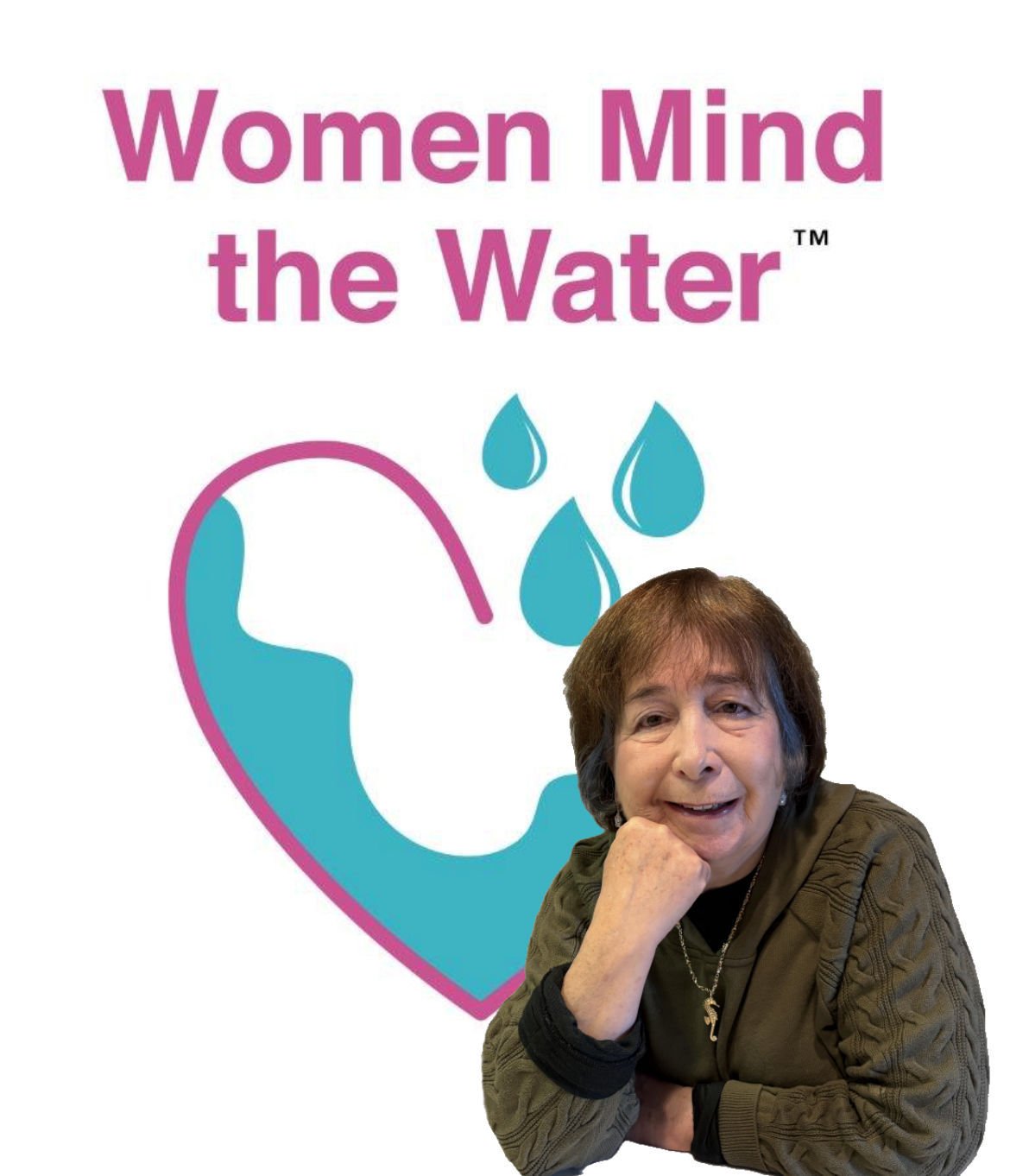
Wo(men) Mind the Water has produced 100 episodes. In this time, the Artivist Series talked with guests from across the globe. Guests speak about their connection with water, particularly the ocean, and how their work relates to this connection. The podcasts are meant to entertain our audience and inspire them to take action to protect one of our most valuable resources – the ocean.
Video conversation with Pam … click here
What Pam talks about…
Pam talks about her earliest experiences making the Wo(men) Mind the Water Artivist Series podcast including some of the problems she encountered. In the beginning Pam was too shy to show her face on the podcast. She is grateful that guests agreed to appear. In one instance she forgot to record the interview and was embarrassed to have to reschedule in order to retape it. Because of Covid, virtual meeting became an acceptable to conduct interviews. This made it possible for Pam to speak with guests across the globe. She has talked to guests on every continent including Antarctica. In this episode, Pam revisits guests she’s talked to on each of the continents and discusses how she has persevered through 100 podcasts.
Women Mind the Water Artivist Series
Show Notes
00:00:03 Today on the Wo(men0 Mind the Water Art of a Series podcast on WomenMindTheWater.com, we're celebrating our 100th episode. That's right, Wo(men) Mind the Water has produced 100 episodes. In this time, the Artivist Series has spoken with guests from across the globe.
00:00:21 Guests have spoken about their connection with water, particularly the ocean, and how their work relates to this connection. The podcast we created is a way to entertain you, our audience, and inspire you to take action to protect one of our most valuable resources, the ocean. You know that roughly half of the oxygen on Earth comes from the ocean. You also must know that the ocean plays crucial roles in the global economy and global ecosystem. It yields food, energy, minerals, transportation, and much more.
00:00:57 My name is Pam Ferris-Olson. I am the founder of Women Mind the Water. I'm also the producer and host of the Women Mind the Water Artivist Series podcast. As this is our 100th episode, I'd like to share highlights and stories from the first 100. While there's a good deal of work that goes into producing the podcast, I feel the effort has been worth it. I admit that sometimes I experience frustration. In making one episode, and thankfully it has been only one, the interview wasn't recorded. It was a frustrating occurrence and embarrassing to admit to the guests why we needed to record the podcast again. In spite of setbacks, I've persevered, and now I've reached 100 episodes.
00:01:44 My motivation? I wanted to build a community. The podcast format seemed the best way for me to celebrate the work being done on behalf of the ocean. It was a way for me to explore the many ways each of us can and does make a difference, a positive difference.
00:02:04 So welcome to the Women Mind the Water Artivist Series. For those who have watched the podcast since the beginning, and yes, there is a video version of this podcast that is in addition to the audio-only version. Those who watch the podcast on YouTube or on womenmindthewater.com know that in those early episodes, I didn't appear on the video. I'm embarrassed to admit this, but I was uncomfortable being in front of the camera. In addition, I was new to video podcasting. I wasn't sure how to edit a recording with more than one person on the screen. This means that my early guests were the only face that appeared in the video. You would hear my voice but not see my face. Instead, the text of the questions I was asking appeared on the screen. My face was replaced by the Wo(men) Mind the Water logo, a heart containing water and three droplets.
00:03:02 I'm incredibly grateful that people accepted my invitation to be on the podcast. I don't know if the guests were aware that I was an inexperienced podcast maker. One of my early guests was Karen Romano Young, a woman who has been an artist in residence on several scientific trips to Antarctica and to the bottom of the ocean in a mini-sub. Karen uses her artistic talents to illustrate her experiences. I admire Karen for what she does and am amazed that she made time to be on a podcast with a host unable to muster the courage to show her face on the podcast.
00:03:44 It's hard to believe that today, the podcast has actually reached a milestone, 100 episodes. The earliest episodes date back to 2021. That was a strange and sometimes scary time. Thanks, COVID. You may remember COVID made personal distancing a requirement. As a result, virtual meetings became the acceptable way to do business. Virtual meetings made it possible for me to conduct long distance interviews. As for my guests, they only needed a computer or a smartphone and about 40 minutes to talk.
00:04:22 As a result, I've spoken to guests living and working on every continent. I don't think it would've been possible for me to successfully do this without Zoom. And as I said, I have interviewed guests on every continent. Karen Romano Young isn't the only guest I've spoken to who has spent time in Antarctica.
00:04:43 Cake artist Rose McAdoo has done at least three stints there, including one during the winter. During her stays, as well as in other polar regions, Rose creates amazing edible sculptures. At the National Science Foundation's McMurdo Station in Antarctica, Rose created a seven-cake series about her residency.
00:05:08 From the continent of Europe, I've spoken with a growing list of guests, many based in the Netherlands. Maria Westerbos, the founder of the Plastic Soup Foundation, is one of them. Maria's work addresses the environmental and health consequences of plastic pollution. Another guest, Angèl Etundi-Esamba, is a Cameroonian-born photographer who now lives in the Netherlands. Angèl and I talked about her photographic series titled Women of Water. It's a series exploring the women of Ganvie, a lake village in the Benin Republic of West Africa.
00:05:48 On the Asian continent, I've spoken with Nina Azzahra who lives in Indonesia. Born in 2007, Nina is among the youngest guests I've talked with. She may be young, but she already has an impressive body of work. Nina stepped onto the world stage speaking at the Plastic Health Summit. At that summit, Nina demanded that the world stop using Indonesia as the end point for their waste streams.
00:06:17 Of course, I've spoken to many guests from North America, including Violet Sage Walker, who carried her father's vision for their ancestral home to a successful conclusion. Her work resulted in the designation of the Chumash Heritage National Marine Sanctuary, the 17th National Marine Sanctuary to be designated in the U.S. The work of Violet and countless others will provide protection to significant natural, cultural, and historic resources and bring new opportunities for research and community engagement.
00:06:52 The podcast has touched South America and Africa with guests like Brazilian-American Manuela Zoninsen, who founded Kadea, a company with a mission to tackle the single-use bottle problem.
00:07:07 With Dianna Cohen, a visual artist and co-founder of the nonprofit Plastic Pollution Coalition, there were a number of problems. First, there were audio troubles. After several frustrating minutes, it turned out I had forgotten to check the microphone settings. As I was still new to podcasting, I hadn't yet understood the importance of technical run-throughs before connecting with the guests. The technical difficulties left me flustered, so much so that I couldn't say her name correctly. Although it is spelled D-I-A-N-N-A, her name is pronounced Deanna. I still am embarrassed about my rookie mistakes, and I'm grateful to Dianna for her patience. You can bet that these days I spend time before each interview checking the audio and visual settings prior to the podcast, and I ask guests how to pronounce their names.
00:08:03 Podcasting, to do it well, takes a lot of work, especially if you produce both an audio and a video version like I do. There's a long list of things I do before a podcast is ready to post. It isn't as simple as calling up a guest, recording the conversation, and then posting it on the Internet.
00:08:23 It begins with me researching the guests. I use the information I get from them and online to write a draft script. A draft script consists of an introduction and sample questions. I look at the podcast as a collaborative process, so I send the draft script to the guests for their comments. This assures that I get my information correctly and hopefully puts my guests at ease by letting them know what we'll be discussing. It gives the guest a chance to think about what they want to say. This makes the podcast easier to listen to because the guest isn't searching for what to say. Having a draft also makes it easier for me because before an interview, you practice reading the script. I edit it to improve the flow of the questions and eliminate tongue twisters.
00:09:14 Once the interview has been recorded, the work switches to the editing phase. The music is added and the audio portion is edited to make it easier to listen to and keep the length of the show to about 20 minutes. With video podcasts, I insert photos and videos that support the conversation and in that way make it visually more interesting than just two people talking.
00:09:40 When the podcast is finished and processed, there's a work of posting the podcast on the Women Mind the Water website. And then, of course, there is more work posting the podcast on YouTube, iTunes, and various social media sites.
00:09:55 Bottom line, there's a lot of time-consuming detail that goes into making a podcast. I think it's worth it, I hope you, the audience, thinks it's worth it, too.
00:10:07 We all can play an important role in protecting our planet. We need to find a way that works for us. For me, the answer has been Wo(men) Mind the Water and the Wo(men) Mind the Water Artivist Series podcast. I believe it is here that I tell the stories that need to be told to share what is being done by creative people to safeguard our free planet.
00:10:29 To those who supported this podcast from the beginning, I want to send a big thank you. And to those who have only recently discovered the Wo(men) Mind the Water Artivist Series, I say welcome. I hope you like what we do and will become regular listeners.
00:10:46 And now I'd like to remind you that this is the 100th episode of the Wo(men) Mind the Water Artivist Series podcast. The series can be viewed on womenmindthewater.com and YouTube. A transcript is available on womenmindthewater.com, and an audio-only version can be listened to on iTunes and Spotify.
00:11:08 Wo(men) Mind the Water is grateful to Jaine Rice for the use of her song, Women of Water. All rights for the Wo(men) Mind the Water name and logo belong to Pam Ferris-Olson. This is Pam Ferris-Olson.