Artivist Series - Rebecca Aguilar
documentary films
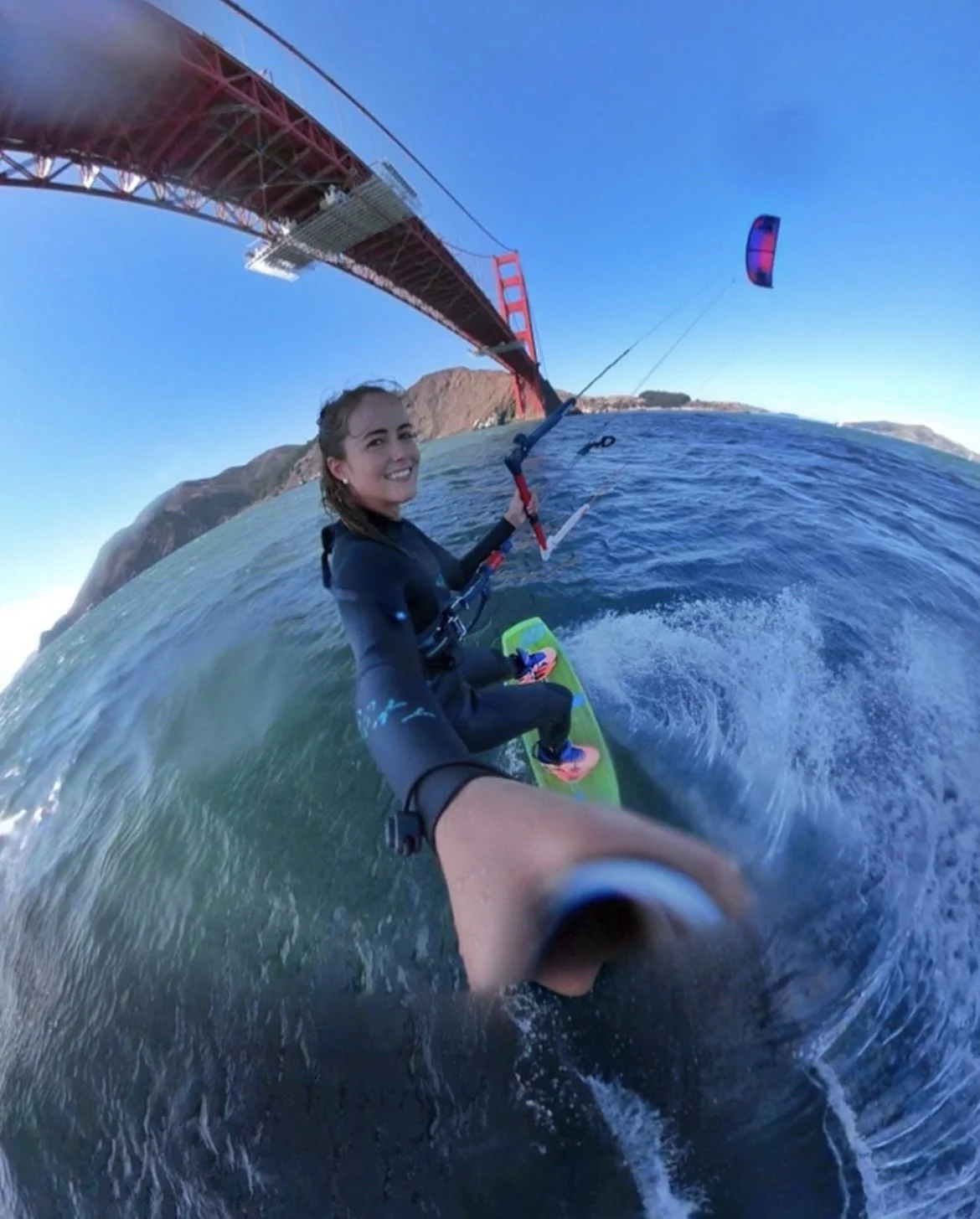
Rebecca works for the Oceanic Preservation Society, a movie production company located at Skywalker Ranch in the San Francisco Bay area. She changed course several times before settling in a job where she feels fulfilled by the work. Rebecca is currently involved with post-production work on the film Speaking with Giants, a film about whale communication.
Video conversation with Rebecca…click here
What Rebecca talks about …
Rebecca recalls an experience hiking in the Sierra Nevada Mountains as a teenager. The experience instilled in her a love of the natural world. In college she majored in communication and then you went to work in finance and later in sales. Neither of these jobs fulfilled her. Eventually she found a much lower paying job in the film industry that resonated with her. The job has the elements that had been missing in the other jobs. She felt an environmental purpose. She works with the Oceanic Preservation Society and has worn many hats there. One of her current roles is working on the documentary Speaking with Giants. The documentary will follow a team of researchers looking to unlock the language and communication of whales. She says that the beauty of a film like this is that you can use “whales as a vehicle to open an understanding to humanize species in a certain way. And I think that humans have the natural tendency to view animals as a product, not as individuals… if you can make a film that is, inspiring, uplifting, that makes you feel something in your heart, that might not just purely give you information and maybe shame you in a certain way about your choices or make you feel bad in a certain way.” Rebecca believes that a film like this can generate a level of awareness that pushes conservation efforts around not only whales, but all species.
Show Notes
00:00:07 Pam Ferris-Olson Today on the Wo(men) Mind the Water Artivist Series podcast on WomenMindTheWater.com, I'm speaking with Rebecca Aguilar. Rebecca thought she'd landed her dream job until she realized that her heart wasn't engaged in the work. That changed when Rebecca joined a team of documentary filmmakers. Today we're going to talk with Rebecca about making high-impact films, films that have the potential to spark lasting change.
00:00:39 Rebecca Aguilar is the latest guest on the Wo(men) Mind the Water Artivist Series podcast on womenmindthewater.com. The podcast engages artists in conversation about their work and explores their connection with water. Through their stories, Wo(men) Mind the Water hopes to inspire and encourage action to protect water and all the creatures that depend on it.
00:01:06 I'm talking with Rebecca Aguilera on the Wo(men) Mind the Water Artivist Series podcast. Rebecca works for a movie production company located at Skywalker Ranch, the fabled movie studio owned by George Lucas of Star Wars fame. Rebecca works with the Oscar-winning documentarian Louis Psihoyos. She is involved with post-production work on the film Speaking with Giants. It's a film about whale communication.
00:01:38 Welcome, Rebecca. You currently work with movie visionaries who are teaching you how to shape impactful stories. So let's begin by talking about a life-changing event for you.
When you were 16, you went on a backpacking trip in the Sierra Nevada mountains. How does an experience that you characterized as ‘grueling’ instill a love for nature? Maybe you could start with describing the Sierra Nevadas and how different that experience was from what you were used to growing up near San Francisco.
00:02:15 Rebecca Aguilar Yeah, of course. So I spent two weeks for last with a pack on my back on a trail called Evolution Valley in the Sierra Nevadas. It's a beautiful mountain range.
And I was about 16 at the time. And like many teenagers, I have no idea what I wanted to do with my life or who I was. And you know, something that my dad had always taught me as a kid is, you know, doing meaningful work is so important in life and you spend, you know, most of your waking hours doing work. And if you don't do something that you love and something that doesn't have meaning, your life will lack a bit of purpose.
00:02:57 And so I'd have that in the back of my mind. And when I went on this trip, you know, I think humans connection to nature now that people live, you know, whether it's in the suburbs or city, it's we've really lost our connection to nature. And that trip for me opened my eyes, you know, to a world without cars, without exhaust, without buildings. And I just was with a group, a small group, maybe 10 people. And every day, you know, I would experience the changing landscapes because we hiked uphill mostly. And so it's called Evolution Valley because you see the evolution of the landscapes throughout the two weeks. And it really instilled in me a love of the natural world.
00:03:45 And also just, you know, protecting this and having this very valuable experience at that age, I felt like so many people were missing out on being able to experience something so meaningful. And I knew in my heart after that trip, it kind of settled for me that working to fight and protect the last places on earth and to protect the environment so we can have these beautiful places for future generations to connect to that was really important to me.
00:04:14 Pam Ferris-Olson In college, you majored in communication, and then you went to work in finance and later in sales. How did you get into the documentary film space?
00:04:25 Rebecca Aguilar Randomly, actually, at a bar in San Francisco. I want to say I was maybe 24 or 25, and I'd been working in sales. I'd quit my job. And I wasn't passionate about sales at all. And he [a stranger she was talking to at the bar] said to me, “You're at an interesting place in your life where you're capable and you can do a myriad of next steps or jobs.” And he said, “What you really should do,” and it's an important exercise that now I realize everyone should do. So it's good advice for everyone. He said, “You should look at what you want to be doing when you're 50 years old and what you want your life to look like. Everything down from how you want your spirituality to be. Do you want a family? Who do you want your partner to be? What work do you want to be doing? Down to granular things like how many days a week would you want to work out? What do you want your relationships in your life to look like?How many kids do you want? How much money do you want to be making every year?”
00:05:20 And he said, “As you write that nuanced list down, every time that you go look for another job refer back to it. [Ask] is that going to take you one stepping stone closer to where you want to be when you're 45 or 50?
00:05:33 And I did that process, and although I worked in finance and then sales and then I worked in production, every single move that I made in the following eight or nine years was one that was going to get me closer to where I wanted to be. And I knew in my heart ten years ago, I've always wanted to-- I've had a passion for film and storytelling. And so the different positions that I've had have been in the more creative marketing production space in the last ten years.
But one of the elements that was missing for me was more of sole environmental purpose.
00:06:09 And so three and a half years ago, I'd been working in San Francisco for a long time.
I realized I don't really care about making money at the end of the day. That's not going to make me happy. It's not going to be fulfilling. I knew that I really wanted to pivot exclusively to the nonprofit environmental space. And if I could find a space in the film industry, great. They're very few and far in between here in the Bay Area. But I emailed the Oceanic Preservation Society team and they had just a general role in social media marketing.
00:06:41 And although it wasn’t much, you know, I hadn't done work at that lower level if you want to call it that, for many, many years. However, to get your foot in the door in this space, especially coming from not having nonprofit experience prior, exclusive nonprofit experience, it's difficult. And so I took that job and the last three and a half years have been extremely eye-opening, and I've worn many, many hats at the organization since then, and I absolutely love it.
00:07:12 So, I think that taking the acceptance of much lower pay 3 1/2 years ago, it's paid off in dividends. I'm very happy with what I do, and I absolutely love my job and my role has expanded quite a bit.
00:07:26 Pam Ferris-Olson Well, that's wonderful that you love your job. And I have to say, as you were ticking off all the things that this person told you in the bar, it sounded like a great outline for some sort of rom com: all the things that you need to do before you get to be 50.
00:07:44 So you currently work with a production house that I hear you say is called Ocean Preservation Society, and it specializes in documentary filmmaking. What do you think is the biggest misconception that people have about making documentary films, particularly nature documentaries?
00:08:04 Rebecca Aguilar One of the bigger insights for me after working in this space is, you know, documentary films are only made as quickly as the money comes in. So some projects can take five years, some projects can take six years, and some projects can take ten years. The hardest part to complete a film is really you're just beholden to how many funds you have and the support that you have financially around the film.
00:08:32 And so I think a lot of people might take a look at a film and say, oh, that film probably wasn't that hard or it was probably pretty cheap to make. Maybe they would see the production value as not being a higher expense. But the reality is a lot of these, you know, films have varying budgets but there's a direct correlation sometimes with how powerful a film can be and with the budget that you're working with.
00:08:55 It's a very grueling and tiring process and every single documentarian filmmaker that, you know I know, like they do not do this for the money. They do it because they absolutely love this work. And yeah, I think that some people maybe from externally, they can say: “Oh that probably wasn't that hard or it didn't take that long or it seemed pretty simple or this or that” but these projects are very labor intensive and they're very complicated and there's so many stages to the work that needs to be done and so much attention to detail and nuance that I don't think it's easy to see from the outside.
00:09:26 Pam Ferris-Olson Right now you're working on a movie called Speaking with Giants. What's the film's main message and why do you think Louis Psihoyos chose this for a subject for a documentary film?
00:09:39 Rebecca Aguilar Yeah, so Louis approaches film from really changing people's minds and ultimately people's behaviors, how they view the world, how they want to show up in the world. And for this film, Speaking with Giants, we're following a team of researchers that are looking to unlock the language and communication of whales. And with that, you know, if you can bring the audiences along and if you can to a degree, if you can prove that whales have their own language, which scientists believe that they do, you can extend that understanding to any animal. And so, you know, the beauty of a film like this is you can use whales as a vehicle to open a understanding of everyone to humanize species in a certain way. And I think that humans have the natural tendency to view animals as a product, not as individuals. That's why so many humans obviously are meat eaters.
00:10:44 And there's this separation between how people might view their own relationship with animals and maybe their own actions that they might take in their lives. And so I think with a film like this, we'd want to deepen the understanding of all animals being their own individuals with hearts, with souls, with feelings. And you can do that through, you know, showcasing that they have their own alphabets, that these, you know, calves are speaking to their mothers. And now that we can understand what they're saying, that brings a level of relation, I think, to humans and whales in general that we haven't had in the past.
00:11:28 Pam Ferris-Olson Why do you describe him as a visionary documentarian?
00:11:33 Rebecca Aguilar Louis makes films that makes you, you know, you feel something.
You resonate with the characters on screen. You resonate with the message. And his films are very entertaining. Entertainment is at the forefront of what he does. And when you sit down after a long day at work on your couch and you want to turn on the TV, you want to feel something, right? Or you just, maybe you just want to tune out or whatever that might be. But if you can make a film that is, inspiring, uplifting, that makes you feel something in your heart, that might not just purely give you information and maybe shame you in a certain way about your choices or make you feel bad in a certain way. Louis is a visionary in that he can inspire and entertain and educate all at the same time. And that's a rare quality to have.
00:12:21 Pam Ferris-Olson And how are you engaged in this work to get Speaking with Giants produced?
00:12:26 Rebecca Aguilar I wear a lot of hats. I help out with our impact campaigns on films.
We don't have an impact campaign with every documentary we release. But I would say at a higher altitude, I try and help out with just general impact of marketing, of awareness around our films and our projects, of getting people kind of involved. And for this film specifically, we're actually in pre-production of it. So we're currently in the fundraising stage mostly. And all of our projects move forward as the funding comes in. And so for this film, I've just been helping with trying to create documents and communications to help people get on board supporting the film financially.
00:13:12 Pam Ferris-Olson What do you expect the film Speaking with Giants, what do you expect its impact to be?
00:13:19 Rebecca Aguilar I mean, I think if everyone watched a film like this, people would recognize sentient beings as so much more human and similar to humans, you know, than they've ever seen in any way. I think that a film like this can generate a level of awareness and can push for more conservation efforts around not only whales, but all species.
00:13:41 People will really be able to deepen their connection to whether it's their dog or their cat or an owl that they see. You know, once we can recognize that all these species have their own languages and they're actually saying things to one another. And wow, if we can even understand what one species is saying back and forth to members of its own species, you know, that species, I think that's just such a beautiful, yeah, beautiful thing to bring to the world. So massive awareness would be, you know, and love for all other species. That would be our greatest impact.
00:14:14 Pam Ferris-Olson That would be a great impact.
00:14:16 Rebecca Aguilar Yeah.
00:14:17 Pam Ferris-Olson Rebecca, at the end of every podcast, I ask guests to offer advice to my listeners on how they can make a difference. What advice do you have for people who haven't found what it is they want to do but sincerely want to make a difference?
00:14:34 Rebecca Aguilar I think it always starts with, with understanding yourself.
And if you can understand yourself and what you're passionate about, I think that whether it's currently in your life or seeing it at, you know, as a juncture that you might meet later in your life is understanding what you really care about and why. And how are you, you know, is that something that you would see, you know, baking into your career and doing something meaningful? And there's many ways that you can achieve that.
00:15:05 You know, many people have jobs that allow them to do what they're passionate about, whether it's volunteering or being involved in some way or something that you're passionate about on the side. It doesn't have to mean that you make your career into doing your life's passion. However, I would, push and advise people that, gosh, like at the end of the day, if there's a way that you can make something happen in your life and you can make a career out of what you're passionate for, then you really should.
00:15:32 And I've, you know, many times in my life I've had to Airbnb my apartment or I've had to, you know, I've had to do things to be able to do the work that I do, have multiple jobs or this or that. And it's hard, but it's so worth it at the end to really try and prioritize doing what you love and staying centered in what you love.
00:15:57 So it really starts with understanding yourself and understanding what matters to you in this life and chasing that. Because life is short. And if you just focus on the financial aspects, I feel it leaves many people with empty hands emotionally at the end of the day and towards the end of their lives. So don't give up.
00:16:18 Pam Ferris-Olson Thank you very much. That's very profound advice and something for us all to think about.
00:16:26 Rebecca Aguilar Yeah.
00:16:26 Pam Ferris-Olson So I want to thank you for being on the Wo(men) Mind the Water Artivist Series podcast. It seems like you've found your path ,and I wish you and the film Speaking with Giants much success.
00:16:38 Rebecca Aguilar Thank you. Thank you so much, Pam. It was great to meet you.
00:16:42 Pam Ferris-Olson And I'd like my listeners to know that I've been speaking with Rebecca Aguilar, an impact director working with Louis Psihoyos to make impactful films, documentary films. Rebecca is the latest guest on the Wo(men) Mind the Water Artivist Series podcast. The series can be viewed on womenmindthewater.com and YouTube.
A transcript is available on womenmindthewater.com and an audio version can be listened to on iTunes and Spotify. Wo(men) Mind the Water is grateful to Jaine Rice for the use of her song Women of Water.
00:17:19 All rights for the Wo(men) Mind the Water name and logo belong to Pam Ferris-Olson.
This is Pam Ferris-Olson.