Once an Oyster Farmer now a Sustainability Investor - Abigail Carroll
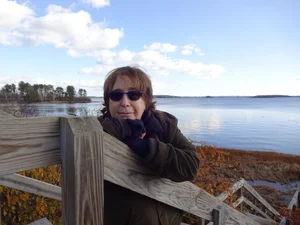
About Abigail Carroll
Abigail Carroll has a Master’s in International Affairs from Columbia University’s School of International and Public Affairs. In 2010 Abigail became an oyster farmer in Maine. After she sold her oyster farm in 2021 she became a mentor for and investor in high-growth start-ups focused on solving sustainability issues. We talk about women’s involvement in oyster farming in Maine, what it takes to be a successful innovator and what we as individuals can do to foster a sustainable planet.
Oyster Farming, Sustainable Business, and Ocean Stewardship
Abigail Carroll has always been drawn to the ocean. Growing up in Maine, her childhood was filled with sailing, beach days, and collecting shells and sea life. A formative experience came when she spent summers with pioneering underwater photographer Bill Curtsinger, learning about marine ecosystems and the early warning signs of declining whale populations.
Though she never imagined becoming an oyster farmer, Abigail found herself building a hands-on, nature-driven business from the ground up—creating a nursery from repurposed materials and learning the realities of aquaculture. She describes oyster farming as both physically demanding and deeply rewarding—a lifestyle that connects you directly to the rhythms of the ocean, even if profit margins are often tight.
Beyond farming, Abigail explores sustainability through storytelling on her podcast, Happy Planet, where she highlights entrepreneurs working to improve environmental health. One example is Brian Tsuyoshi Takeda, whose company Urchinomics restores ocean ecosystems by harvesting destructive sea urchins and turning them into a viable food source.
Abigail believes one of the biggest barriers to solving environmental challenges is not science—but people. A lack of collaboration and shared responsibility slows progress. Her call to action is simple: be more mindful. The choices we make—what we buy, eat, and wear—have a direct impact on the health of our planet.
Through her work, Abigail highlights a powerful idea: sustainability starts with awareness, but it grows through action.
-
Pam Ferris-Olson (00:01): Today on the Women Mind the Water Artivist Series on womenmindthewater.com. I'm speaking with Abigail Carroll, who became an accidental Mainer in 2010 when she adopted an oyster farm. She sold the farm in 2021. Her years working with oysters opened her eyes to the reality of climate change and how it impacts the ocean.
(00:23): These days, Abigail focuses on business innovation. She works as a mentor and invests in startups that propose healthy planet solutions. This is also the focus of her podcast, the Women Mind the Water Artist series podcast on womenmindthewater.com engages artists in conversation about their work and explores your connection with the ocean. Through their stories, Women Mind the Water hopes to inspire and encourage action to protect the ocean and her creatures.
(00:56): Today, I'm speaking with Abigail Carroll, an entrepreneur who is well versed in the marine environment, particularly aquaculture. Abigail has a master's in international affairs. Her degree is from Columbia University's School of International and Public Affairs. It's a field that explores opportunities in the global marketplace. Her background in finance and banking is not exactly what one might expect from somebody doing the physical work involved in raising oysters. Abigail sold her oyster farm in 2021 and became a mentor, an angel investor, and podcaster. She seeks to help small businesses get off the ground, be financially successful, and make the planet a healthier place. Welcome, Abigail.
(01:46): Borrowing from the lyrics of an old song, I'd say you've looked at life from both sides now, as an oyster farmer and as an investor. In both cases, you believe that nature works well if you let it. I'm looking forward to exploring the art of entrepreneurship and how you apply it to create, because your podcast is named The Healthy Planet. Abigail, I'd like to begin by asking if you were always interested in nature and more specifically in marine environments.
Abigail Carroll (02:19): I wasn't one of these kids that was outdoors all the time and fascinated by the nature around me, but I always have loved the ocean. I grew up in Maine, I grew up sailing on the ocean. I grew up going to the beach, collecting rocks, collecting seashells, sea urchins and sand dollars, things that we really don't find very much of on the beach anymore. And at a very young age, between the ages of eight and 10, we rented a house in the coast of Maine next to a gentleman named Bill Curtsinger, and Bill Curtsinger was one of the first people to photograph marine mammals underwater.
(03:10): He's one of the most important underwater photographers for National Geographic, and he just happened to be my neighbor at those two formative summers. And his wife was also an artist and I had an older brother, and we would sneak over to the Curtsinger house all the time. And Bill was so kind and he had us into his dark room. He showed us how he photographed these humpback whales and all these wonderful marine mammals and he taught us about the dwindling population of whales and how it was important to protect them. So at nine or 10, I joined the Save the Whale Foundation, thanks to Bill Curtsinger.
Pam Ferris-Olson (03:55): You would think maybe you'd become a marine mammalogist, but instead, you went on a different path. So did you ever imagine yourself working in a physically demanding job like as an oyster farmer?
Abigail Carroll (04:09): Yeah, it was not at all on my... I had many career visions for myself, everything from lawyer to fashion designer to all sorts of things I wanted to do, and oyster farming was definitely nowhere in any vision that I could have possibly imagined for my future.
Pam Ferris-Olson (04:31): So I think most people have a good idea of what a farmer does but are far less acquainted what it means to be an oyster farmer. Give us a sense of what an oyster farmer does, and is it a good deal of work?
Abigail Carroll (04:45): It's called a farm and not by accident. We really do many of the same things that you would do on land. We plant oysters. You buy little seeds, you could also make seeds, oyster seeds, little baby oysters, but we call them seed but they're basically little tiny millimeter sized oysters. So you buy your seeds, you treat the seedlings different than you would the plants, the bigger plants, which you plant in the soil. So we treated the baby oysters and what we call an up-weller, which is like a nursery. You can have an on shore nursery, you can have an in the water nursery, and then when they get to a certain size, we put them in floating gear where they live for about a year. And then some would spend two years in the floating gear and some would be put on the bottom. We grew them two different ways with very different results.
(05:43): You heard the word gear a lot. There's a lot of gear for sure, but most farms, at least in Maine, are still largely manual but what we do a lot of is tinker. There's a lot of tinkering on the oyster farm. Everybody's trying to figure out how to best run their farm and everybody's farm is a little bit different because of just the way nature works and the way the coast works, and you have different issues on every farm. And they do well on the bottom in certain places by just seeding them on the bottom, and in some places, you can't do that at all. In some places, you have terrible tides or currents and it's very hard to keep gear in. So as farmers mature on their sites, they end up creating a lot of gear to try to optimize their work and the rearing of these oysters.
(06:50): So that part of it, actually, I found really fun. I built my own nursery out of a repurposed lobster tank and five gallon buckets. Five gallon buckets was a big thing on the farm. I never even thought about five gallon buckets before I had an oyster farm, but we made lots of things out of five gallon buckets.
Pam Ferris-Olson (07:15): I hear the words “challenge,” I hear the word or thought of innovation, and I wonder, how common is it for a woman to be involved in this business and how many women are able to get a foothold?
Abigail Carroll (07:31): It is not at all an industry where women can't get in because there's actually quite a long history of women, at least in Maine, in aquaculture. As long as we've had oyster aquaculture in Maine pretty much, there have been women involved.
Pam Ferris-Olson (07:49): So you did their oyster farming and then you switched, flipped the coin as it were and began offering capital to others to start innovative businesses. So I wonder, does that mean you made a lot of money from oyster farming? Is it a lucrative business?
Abigail Carroll (08:10): I don't know how many people are making a lot of money making oysters. I think it's more of a lifestyle business. I think there's legitimately some big farms making some money, but I think margins, even on the scale businesses are probably still very tight, and I think a lot of people are doing it because they love it. You get the bug. You get out there, you relate to nature in an entirely different way, you're living the seasons of the life of the oyster, and you're out in the water. I was down in Scarborough in the Scarborough Marsh, which is Maine's biggest salt marsh, and it's all very flat there. And every day of the year, the light would shift just a tiny bit. It's a beautiful life to be out there every day.
Pam Ferris-Olson (09:04): Can you describe a few of the elements that, in your mind, make an endeavor likely to succeed?
Abigail Carroll (09:13): The product-market fit, you've got to find a product that has a market. Without that, you're just going to struggle. But to get that, you need to have a lot of flexibility. The founders that I think are the most successful are really open-minded and they don't necessarily impose their preconceived ideas on their businesses. They're listening. I think listening to your clients, listening to what's going on, and making observations is probably the most important quality a founder can have.
Pam Ferris-Olson (09:59): Well, you look at a particular niche, so you're interested in businesses that are going to make the world a healthier, more sustainable place. And I'm wondering, many businesses are actually tied to some of the climate change businesses that burn fossil fuel. So how is it possible to believe that business innovation also can be a powerful tool in solving the world's problems?
Abigail Carroll (10:29): For a moment, let's not make gas and fossil fuels the enemy and let's think about over the last hundred years, all of the good things that have been a result of the fossil fuels. We can travel around the planet, we can feed a planet, our houses are warm, we have electricity. So the fossil fuels solved a lot of problems for a lot of time. What we didn't realize was that it was also creating problems. So now we have this new problem, but businesses built that fossil fuel industry up to solve all those problems. So now we've got this new problem, which is like, "Oops, we went too far." And we do that a lot. We go too far in one direction and then we have to, "Oh, we made a big mistake, we made this huge bet, and now we have to correct that." So for me, that's the new problem, and for me, just in the way the business solved all those other problems, riding on the wave of fossil fuels, now we can solve these new problems through business innovation as well.
Pam Ferris-Olson (11:40): Okay. So you're a podcaster and your podcast is called Happy Planet Podcast. So I'm wondering, do you have one guest that in your mind is building a business that is an innovative tool for solving the world's problem? Or if they're all like that, can you pick one?
Abigail Carroll (11:57): Well, the guest that was really the inspiration for the whole podcast, his name is Brian Tsuyoshi Takeda, and the business is called Urchinomics. In many, many parts of the world, there are urchin barrens. There are so many sea urchins in areas that they actually devastate the local ecosystem, and it becomes a dead zone where nothing can live because there's nothing, the urchins have sucked all the life out of it, and it gets so bad that the urchins start to die. So you've got these huge, huge areas of the ocean around the planet where these urchins are just basically gasping for life and they've killed everything around them.
(12:47): So he's going around and he is picking up all these urchins, and when he does that, the kelp forests grow back and the kelp forests are these wonderful habitats for sea life. So he's pulling out all these urchins, he's taking them on land and he's feeding them and breathing life back into them. And they're going out to the market as a wonderful delicacy, and so he's creating food, he's creating jobs, and he's restoring these ecosystems. So he is up-cycling these pretty much almost dead urchins, the ecosystems are getting repaired, and then he's actually using the shells too. Once he takes the meats out of the sea urchins, they're using the shells to make fertilizer products and other things. So he's using a hundred percent of the animal.
Pam Ferris-Olson (13:50): Abigail, I always end the show by asking my guest to issue a call for action. I'd like to ask you this question in two parts. First, what do you think is the biggest issue that needs to be addressed in order to solve the world's problems? And let's focus on those relating to the world's oceans.
Abigail Carroll (14:09): I wouldn't know which is the most important ecological problem. I think the real problem is there's lack of consensus and unwillingness to cooperate. I feel like the problem's always the people. We have to talk more, we have to share more, we need international cooperation. We need a bit of a new paradigm and it just seems like the world is getting more and more divided and humans are getting more and more divided, and the climate issue is more and more urgent.
Pam Ferris-Olson (14:54): Right. So I'd like to know, what do you think members of the audience can do to help effectuate change?
Abigail Carroll (15:01): I think we just all need to be really mindful of our footprint, and our footprint extends to the things we buy, the things we wear, the things we eat. And I think once you start thinking about your footprint and becoming aware of it, you start to change some habits. And I think everything comes down to our footprints.
Pam Ferris-Olson (15:30): So I know you're a busy person and I'm grateful for the time that you made to be on the Women Mind The Water Artivist Series podcast. I expect listeners have learned much and found our discussion interesting and informative. I'd like to remind listeners that I have been speaking with Abigail Carroll, a woman who has worked as an oyster farmer and now is an entrepreneur helping innovative startup businesses that are designed to make the planet a healthier, more sustainable place. Abigail Carroll is the latest guest on the Women Mind the Water Artist Series podcast. The series can be viewed on womenmindthewater.com, museum on Main Street and YouTube. An audio only version of this podcast is available on womenmindthewater.com, on iTunes and Spotify. Women Mind The Water is grateful to Jane Rice for the use of her song, Women of Water. All Rights For the Women Mind the Water name and logo belong to Pam Ferris-Olson. This is Pam Ferris Olson.
00:00:54 Pam Ferris-Olson The Women Mind the Water Artivist Series podcast on womenmindthewater dot com engages artists in conversation about their work and explores their connection with the ocean. Through their stories, Women Mind the Water hopes to inspire and encourage action to protect the ocean and her creatures.
00:01:18 Pam Ferris-Olson Today I am speaking with Tosha Grantham who is doing important work in the restoration of coral reefs. Tosha is, by training and professionally, an art historian. As a volunteer scuba diver with the non-profit Diving with a Purpose, Tosha has learned how to identify and document characteristics of a healthy ocean. Specifically Tosha has learned how to conduct surveys of reef fish, invertebrates and ocean floor substrates, all important in determining the health of coral reefs.
Welcome Tosha. I am grateful to you for making time to talk with me. I believe you have much to share about the intersection of art and the rarely seen world that lies below the ocean’s surface. I’d like to begin by learning a little about you and your academic and professional journey. Tosha, where did you grow up and when did your interest in art history begin?
00:02:13 Tosha Grantham Well, first I'd like to thank you, Pam, for having me on Wo(men) Mind the Water and also being able to speak to you about DWP CARES. I grew up in Richmond, VA and also spent a lot of time living in the Washington DC area. Having gone there for school, first undergraduate at Georgetown, and then later studying at Howard. But I also worked in DC over the years. In the late 90s, there's a professor emeritus of Art and Art history at Spelman College, Dr. Arturo Lindsey. And he started a summer art colony that was based in and still flourishes in a Caribbean Panamanian village called Portobello. And so as a part of our artistic process, we would work in nature and also snorkel. So it's really during that experience working and having a studio on the water and snorkeling as a part of gathering and research that really made me want to say, “OK, I see how this connects. How environmentally responsible materials are important and how just being in that environment informs me and my work and makes me feel.”
00:03:40 Pam Ferris-Olson So the history for many African Americans is deeply entwined in the slave trade and their ancestors journey across the Atlantic. Is there an area of art that focuses on this history from the perspective of what lies below the waves?
00:03:56 Tosha Grantham So African and African diasporic, American, European, international, African. People have not only history in the slave trade but also in transatlantic and transpacific. I feel that the slave trade, and particularly DWP's work, in really locating and documenting ships that are on the bottom of the ocean that carried our ancestors creates a richer and more voluminous understanding of African people and American people in many ways, like in many layers. So we are working on reconciling this, you know, very deep, painful experience through locating and doing the actual research to know what the experiences of those people who were lost at sea were and to include that in the stories that we have of survival and being. You know, being very involved in developing stories of African and African American history today.
00:05:22 Tosha Grantham When I learned how to dive, I really wanted to learn how to see and explore this vast universe. This vast landscape that's below us. That's a part of the world that we live in, and it just really made me want to be able to stay down longer and to see more in the area around 15 to 30 feet. Through the two archeology courses that I took with the Diving with a Purpose in the Keys, the Florida Keys, and also in the village of Cahuita in Costa Rica. I started to learn underwater archaeology. And at the same time I was studying coral survey techniques through CARES which is our collective approach to restoring our ecosystem.
It's important to understand that DWP CARES has two branches: the archaeology side and also the coral restoration side, which is newer. We have an online course that's actually occurring right now where students are learning how to identify the animals and what are the characteristics of a healthy reef. But also like facing the fact that we won't always have the reefs of our minds or of our dreams. We also have to document what's actually going on. And sometimes that shows distress or overfishing or too much fertilizer, creating extra nitrites in the water. So there's a part of it that is being able to use the skills that you have as a diver, to have a clipboard in hand and your mylar-like leadless pencil. You know, documenting fish on what's called a line of transect. So you and a buddy have an area that you're responsible for. You go down the line looking for certain types of fish, like yellow snapper or maybe Margaret Margate. You may also be looking for the size of a parrot fish to make sure it's within the range that you want to document as an indicator. And then you go back up the line looking for things like spiny lobster and sea urchins, banded coral shrimp, or any of the indicators in the vertebrate column. So it's very like slow, tedious, detailed work to actually, you know, get usable results. We have fantastic teachers at CARES. They are taking online instruction right now. I think 55 adults and young people came by so we will all be prepared in June to get in the water as survey teams and do the work in the Keys.
00:08:37 Pam Ferris-Olson So what is the background of many of the divers?
00:08:41 Tosha Grantham It can vary. I think that there is a very strong core group of DWP divers who are scientists and veterans or engineers or doctors. People who had various fields and spent time, you know, diving and diving in amazing places all over the world and coalescing. Different skill sets. So you know it's a big volunteer effort. But they're also teachers and students and veterans. You know, it's really an effort of so many different professions and so many different sensibilities, but all connect to diving.
00:09:26 Pam Ferris-Olson Fascinating. So have you encountered challenges as you've trained to work as a volunteer for Driving with a Purpose? And if so, what kind of challenges is there in doing this kind of work?
00:09:38 Tosha Grantham Well, you definitely have to be prepared and like totally fit. We always need more resources to be able to train other divers, especially young people.
Sometimes you may want to go out on a dive and you have it well mapped out. You're going to either do these coral surveys or this archaeological project and then the weather won't allow you. So you can be in place and prepared and have to wait another day or two. There is definitely the need for flexibility when coming up with projects that involve the ocean.
00:10:30 Pam Ferris-Olson It sounds like a very enriching program. What happens to the data that you collect? Does it get published?
00:10:40 Tosha Grantham The organization CARES has a relationship with NOAA. Kramer Wimberley, who is the lead instructor and master diver associated with CARES and the founder of CARES and also a DWP board member, is also active in the archaeology side. He works with organizations like the National Marine Sanctuary and NOAA, so the data collected is sent to organizations and broader databases that can use it. So one of the things we're doing is to try to learn how to make accurate data sets that can be uploaded to organizations that need the data to help manifest science.
00:11:31 Pam Ferris-Olson Important work. So what keeps you going or going back to Diving with a Purpose?
00:11:38 Tosha Grantham Well, it feels like something that I can contribute. My training has largely been in the arts. I have taken geology and biology and, you know, some sciences. So it's been so long academically it’s a nice way as a citizen science. It’s not like a trained marine biologist who is able to contribute through broader studies, but it's nice to as an artist, as a diver as an organizer to be able to use those skill sets to help in this way. Whether you dive or not, the ocean is contributing a lot of oxygen to the air we breathe. So it feels really good to be able to learn techniques and platforms that allow me to contribute to ocean.
00:12:40 Pam Ferris-Olson Nicely said. So does your work with Diving with a Purpose affect your relationship with art?
00:12:47 Tosha Grantham I would say “Yes”, because it's definitely helping the way that I see. And the environments that I'm seeing are expanding. As I get an opportunity to reengage with art, I'm sure that there will be an impact. I feel the impact already in other types of work that I'm doing.
00:13:10 Pam Ferris-Olson I'd like to have you tell us where we can go to learn more about Diving with a Purpose.
00:13:17 Tosha Grantham So Diving with a Purpose dot org is the website. In the program category, you can see both the archeology, the maritime archaeology program, and CARES which is the collective approach to restoring our ecosystem. And in each group you will see adults and youth opportunities. You'll see opportunities for 14 to 21 year olds in the archaeology and the CARES category. And then there may be international opportunities like Costa Rica for archaeology and Honduras for CARES.
00:13:57 Pam Ferris-Olson Very good. Thank you. So I'd like to ask you now for a call to action on behalf of the ocean. What do you think is the biggest issue that needs to be addressed and what do you recommend people do to address the problem?
00:14:12 Tosha Grantham As people here know, one of the greatest and most important things that we can do is to take care of the ocean and everything that we have, both environmentally and each other, so that these resources remain for next generations. Our most important job is to course correct in ways that don't use so much energy and resources up and find greater ways to contribute to sourcing so that we are responsible Earth stewards for future generations.
00:14:53 Pam Ferris-Olson So Tosha, I wonder how you respond to people who suggest that they don't have it within their power to protect something as large as the ocean, which makes up 3/4 of our planet.
00:15:06 Tosha Grantham Well, it's a daunting proposition and it is a big resource. Newly learning so much through taking the CARES coral courses and participating in the underwater aspects of the archaeology program has just plugged in to the number of people and organizations who are doing this globally. So in some ways it's affirming because there are a lot of people out there really trying to create community and greater resource and connectivity between all of the people who are doing the work so. It is big. I think that there are people out there who really are, you know, giving it their very best to do everything they can.
00:16:02 Pam Ferris-Olson Thank you, I am really grateful you shared your story with Wo(men) Mind the Water Artivist Series podcast. I hope listeners have had a window opened on a world they were previously unfamiliar.
I’d like to remind listeners that I have been speaking with Tosha Grantham, an art historian and volunteer with Diving with a Purpose, an international nonprofit that for nearly two decades has trained Black scuba divers to assist in the documentation of underwater culturally and environmentally important sites. Tosha Grantham is the latest guest on the Wo(men) Mind the Water Artivist Series podcast. The series can be viewed on Wo(men) Mind the Water.com, Museum on Main Street, and YouTube. An audio-only version of this podcast is available on Wo(men) Mind the Water dot com, on iTunes, and Spotify. Wo(men) Mind the Water is grateful to Jaine Rice for the use of her song Women of Water. All rights for the Wo(men) Mind the Water name and logo belong to Pam Ferris-Olson. This is Pam Ferris-Olson.